

(First, some book stuff…)
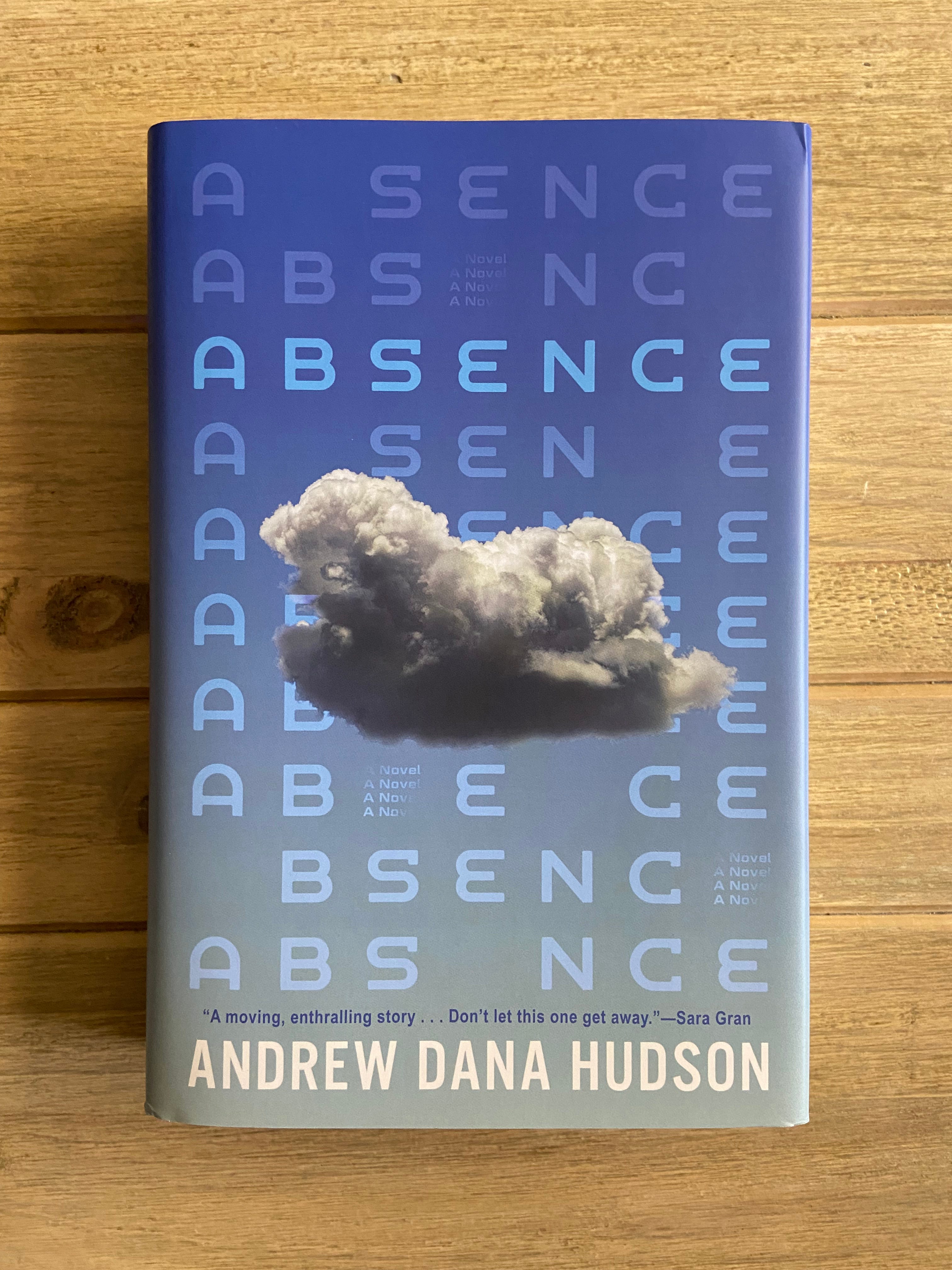
All of a sudden, pub date is a few weeks month away! Absence: A Novel drops May 5th from Soho Press. It’s a speculative detective story that The Optionist called “The Leftovers meets Fargo.”
This month we were blessed with a wonderful starred (!) review from Publishers Weekly:
“Hudson (Our Shared Storm) gives a skillful metaphysical twist to a tale of apocalyptic horror in this strikingly original novel. Its setting is a near-future America devastated by “popping” . . . The thoroughness with which Hudson imagines how individuals and society would have to rewire themselves to contend with this bizarre phenomenon lends his tale impressive philosophical heft.”
—Publishers Weekly, Starred Review
You can get it wherever books or ebooks are sold (i.e. Amazon, B&N, Bookshop.org, your local bookstore). There’s also an audiobook edition (Audible, Apple Books, Kobo). And as a lover of libraries, I’d very much appreciate if folks could put in requests for their local libraries to acquire a copy for everyone to enjoy.
I’ll also be on tour, talking about the book with some really smart people. Here’s the current schedule:
April 27, 7pm, Tempe @ Changing Hands w/ Matt Bell (Note the Tempe location; in previous newsletters I mistakenly put it in Phoenix.)
May 6, 7pm, Scottsdale @ The Poisoned Pen Bookstore w/ Chloe Jensen (watch the stream)
May 14, 6:30pm, Brooklyn @ Lofty Pigeon Books w/ Jinwoo Chong
May 26, St. Louis, Left Bank Books w/ Scott Phillips
July 2, San Diego, Mysterious Galaxy w/ Jac Jemc
If you’re a bookstore, festival, or con and want me to come do an event with you, please contact Soho Press publicist Alex Wilcox (awillcox@sohopress.com). Same goes for press inquiries about the book.
New Fiction: “Dad Died on Discord”
I have a flash piece out today: “Dad Died on Discord” in Lightspeed Magazine. It’s also on Lightspeed’s podcast, narrated by Stefan Rudnicki. Here’s a snippet:
When we moved Dad to the care facility, his only complaint was the wifi. “Laggy,” he called it when he was having a good day. “Fucking piece of shit,” he called it the rest of the time.
At first I was relieved. I’d been worried that he’d bristle at the cramped room, like a zoo animal pacing its enclosure in a sad documentary. But he never said a word about the bedsit quarters or the unfamiliar, ever-churning staff. He didn’t mind the food, which was prescription and bland, delivered from the AllMart pharmacy (though once management caught him drone-dashing tacos in through the open window). He never complained, as long as the wifi was working and he could sit up gaming in his railed hospital bed. When the wifi was down, however, he’d spit and rage, sulk and mutter, throw his food on the floor and his silverware at the nurses. Civil disobedience tactics from the bad old days.
Sometimes when I finish reading a book, I’ll try to write a fictional response. Just a thousand words or so trying out some technique the author uses or seeing what I have to say about the themes or ideas or because a book annoyed me and I want a way to vent. Sometimes these don’t go anywhere, but often this ends up being very generative. For instance, I wrote the opening of “The Love Pyramid: A Rocky Cornelius Consultancy” in response to Gabrielle Zevin’s Tomorrow and Tomorrow and Tomorrow (not an endorsement). A crucial story a character tells in Absence emerged from responding to Deesha Philyaw’s The Secret Lives of Church Ladies.
I wrote “Dad Died on Discord” after reading Something I Might Say by local AZ author Stephanie Austin. This funny-sad memoir about Austin coping with the slow death of her father and then grandmother — the latter during the covid lockdowns, so they had to visit her deathbed from outside the window — got me thinking about how I and my fellow millennials will fare when we get to the nursing home. I sat down to write a response, and this story poured out of me in one sitting.
While everyone of every age has adapted to living online, wielding smartphones, navigating social media, there’s a pretty clear divide between those generations who grew up before video games and those who grew up after. We don’t think of gaming as an activity 80+ year olds are interested in (beyond bingo, checkers, etc.), but that’s because gaming culture hasn’t been around that long. In another four or five decades, millennials will be elderly, and I don’t imagine we’ll give up our consoles and controllers.
After all, we’re already moving into our 40s and we haven’t grown out of gaming yet. Instead gaming has grown up with us, becoming more elaborate, more adult, more sophisticated as an artistic, storytelling, and experience-generating medium. I mean just look at these games C surveyed in her most recent Cosmic Mystery Club newsletter.
And games are a medium I (mostly) understand. I already feel somewhat alienated by the gen Z cultures of short form vertical video, but I can pick up and play most any video game. Not all millennials are like that, of course; I have non-gamer friends who struggle with two-stick navigation. But millions of us now have a shared literacy around the iterated conventions of the FPS, the RPG, the roguelite, the metroidvania, et al. Games will become even more culturally important as the Boomers pass on and the gaming generations move into political and cultural dominance. (Will AOC be the first gamer president??)
Will this be a permanent ratchet? I don’t know. This story is narrated by an avid-and-elderly gamer’s adult son, who grew up into an aversion to gaming culture the same way I can’t stand the blare of commercials on broadcast TV. The 18yo students I teach are already frustrated with the tech-mediated world they were forced into. What about the kids being born now, who are either iPad babies or raised by parents determined to keep them away from screens? There’s a chaotically swinging pendulum.
Personally, I take comfort in the idea that when I’m old, I’ll still be gaming. Exploring digital worlds when I no longer want to travel, jumping and running when my body no longer agrees to perform those maneuvers. And hopefully I’ll be able to game with people. Discord is far from a perfect medium, but chatting with far-flung friends while sharing an interactive experience like a Magic: The Gathering draft or fighting a Silksong boss has become a facet of my social life I enjoy immensely. I like to think that some of my buddies — who already gather in voice channels titled “Old Men Complaining” or “Screaming Adults” — will still be gaming together decades from now, just like those old guys you see who meet at the bar every week, year after year, as long as they can.
This story is special to me. There’s touches of autofiction in it, though warped, repurposed, passed through the prism of a younger generation trying to understand their predecessor’s experience. It’s also lowkey a solarpunk story, set in a world of UBI, AllMart, five thousand-person dance troupes, and a vast migrating solar maintenance workforce. It’s very short, but packed with little details I’m very proud of. Give it a read.
There are institutions that nudge people into particular visions of elderity, and children who have ideas of what’s best for their parents, but in the end every generation has to figure out for themselves what it means to be old. My parents have become master gardeners and voracious readers — even though they sometimes get stuck scrolling like the rest of us. I hope to follow in their footsteps, but I also hope I’ll get to keep experiencing the particular delights and rushes of games, which I’ve been taking pleasure in and meaning from for some thirty-odd years. Give me another thirty, another sixty. Let me game until I drop. Take the controller gently from my cold, dead hand.
Art Tour: The Gateway / Thanatos Wave
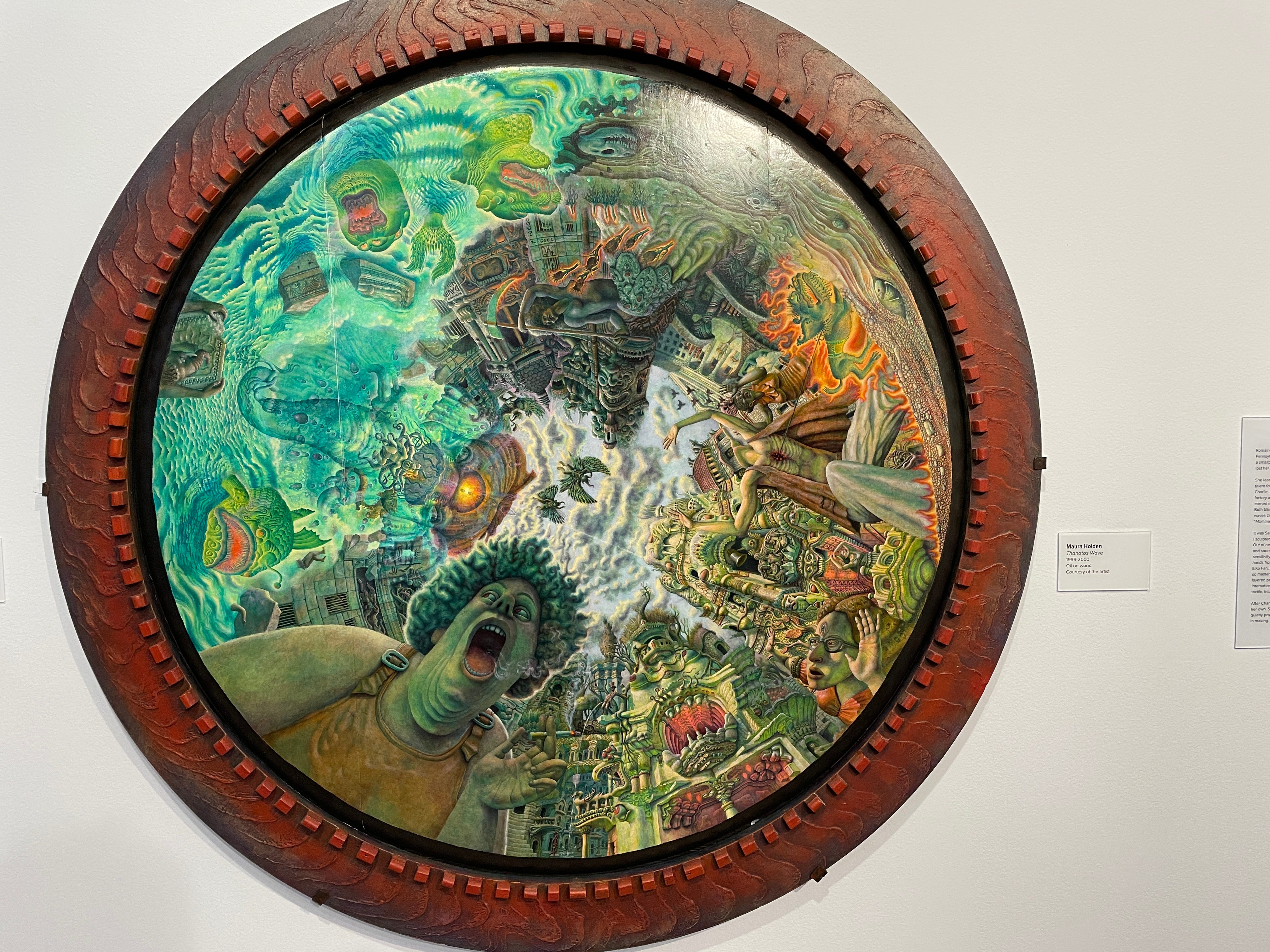
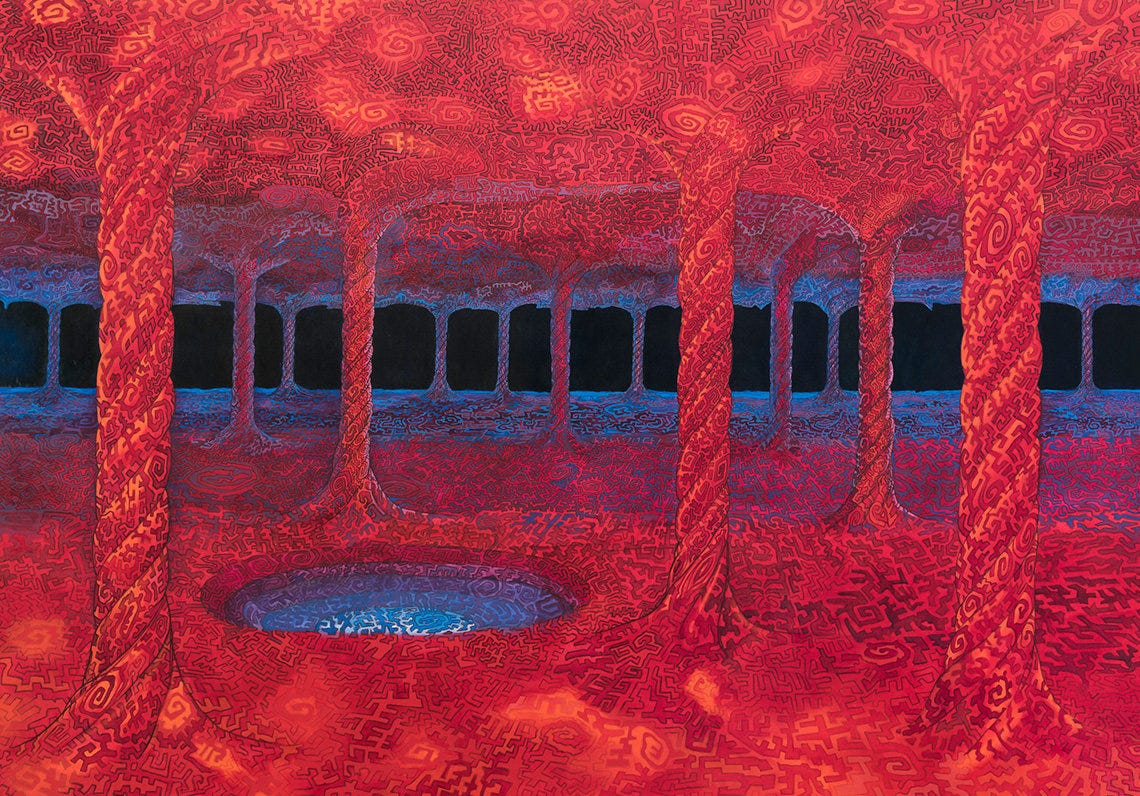
Still thinking a lot about my visit to the American Visionary Art Museum (AVAM) in Baltimore last month. This here is an incredibly evocative piece of surrealism/Lovecraftian horror, Thanatos Wave by Maura Holden. Higher up is The Gateway by Antar Mikos, which one needs the red-and-blue 3D glasses provided in the gallery to appreciate fully. Both are part of the “Fantastic Realities” exhibit of sci-fi-esque art, which runs until September.